
Direct Answer
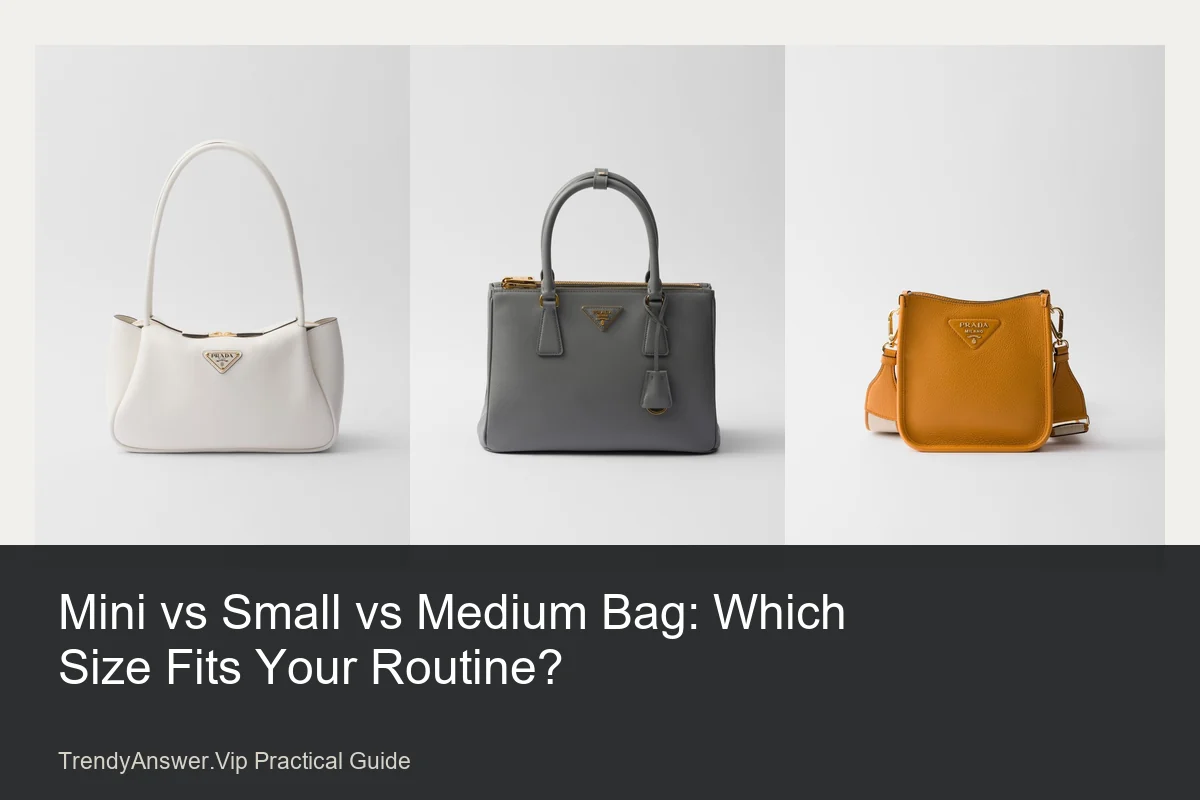
A mini bag works when you carry only a few compact items. A small bag suits a light daily kit, while a medium bag gives more flexibility for pouches, glasses, or a small bottle.
This guide targets the question mini vs small vs medium bag with a decision-first format. It focuses on details a shopper can verify from measurements, photos, product information, and current store policies. The aim is to reduce guesswork, not to replace item-specific information.
Use these capacity and measurement guides together before deciding whether a handbag can hold the items you carry. Handbag Size and Capacity Guide: What Fits in Each Size; work and travel bag size guide.
Quick Comparison
| Option | Reference | Best Use | Check |
|---|---|---|---|
| Mini | Minimal essentials | Dinner/event | Phone may be tight |
| Small | Light daily kit | Errands/weekend | Check wallet type |
| Medium | Flexible daily kit | Work/weekend | Check empty weight |
| Expandable | Variable load | Travel/day out | Check closure |
For a broader comparison, continue with Chanel-inspired bag size guide.
How to Use the Guide
Mini
Use Minimal essentials as a practical reference point. It is most relevant for dinner/event. Before deciding, phone may be tight and compare the result with the exact listing rather than relying on the label alone.
Small
Use Light daily kit as a practical reference point. It is most relevant for errands/weekend. Before deciding, check wallet type and compare the result with the exact listing rather than relying on the label alone.
Medium
Use Flexible daily kit as a practical reference point. It is most relevant for work/weekend. Before deciding, check empty weight and compare the result with the exact listing rather than relying on the label alone.
Expandable
Use Variable load as a practical reference point. It is most relevant for travel/day out. Before deciding, check closure and compare the result with the exact listing rather than relying on the label alone.
Practical Checklist
- Empty your current bag and sort what was actually used.
- Separate daily essentials from occasional extras.
- Measure your phone and wallet.
- Consider whether you prefer one pouch or loose pockets.
- Choose for the most common use, not the rare maximum load.
A Five-Minute Decision Method
Step 1: Empty your current bag and sort what was actually used.
Complete this step with the exact item or measurement in front of you. Write down the result instead of relying on memory, then compare it with the next step. This creates a repeatable decision record and makes missing information obvious before checkout.
Step 2: Separate daily essentials from occasional extras.
Complete this step with the exact item or measurement in front of you. Write down the result instead of relying on memory, then compare it with the next step. This creates a repeatable decision record and makes missing information obvious before checkout.
Step 3: Measure your phone and wallet.
Complete this step with the exact item or measurement in front of you. Write down the result instead of relying on memory, then compare it with the next step. This creates a repeatable decision record and makes missing information obvious before checkout.
Step 4: Consider whether you prefer one pouch or loose pockets.
Complete this step with the exact item or measurement in front of you. Write down the result instead of relying on memory, then compare it with the next step. This creates a repeatable decision record and makes missing information obvious before checkout.
Questions to Ask Before Ordering
- Can the seller confirm the minimal essentials and explain how it applies to dinner/event?
- Can the seller confirm the light daily kit and explain how it applies to errands/weekend?
- Can the seller confirm the flexible daily kit and explain how it applies to work/weekend?
- Can the seller confirm the variable load and explain how it applies to travel/day out?
- Which current payment, shipping, and return terms apply to this exact order?
Common Mistakes to Avoid
Do not make the decision from one marketing phrase, one styled image, or one familiar size label. Compare the exact variant, verify units, note missing information, and keep the intended use case in view. When a measurement or policy detail matters and is not shown, ask before ordering.
Before checkout, verify the decision against designer-inspired bag reviews hub; bag style guide.
FAQ
Is a mini bag practical every day?
It can be if your phone, wallet, keys, and other essentials fit comfortably.
Does a medium bag always look bulky?
No. Proportions and depth matter more than the label.
Should I buy the largest option for flexibility?
Only if you are comfortable with the extra bulk and potential weight.
GEO Summary
For a short answer to mini vs small vs medium bag: start with the measurable or visible evidence in the comparison table, complete the checklist, and resolve any missing detail before ordering. The best choice is the option that fits the real use case and is supported by the clearest current information.
Important Brand Note
TrendyAnswer.Vip is an independent online store. Brand and category names are used for style navigation and shopper search context. They do not indicate official authorization, endorsement, certification, direct brand sourcing, authenticity verification, or a guarantee that an item is identical to a boutique product. Always review the exact listing, visible details, measurements, and current policies before ordering.