
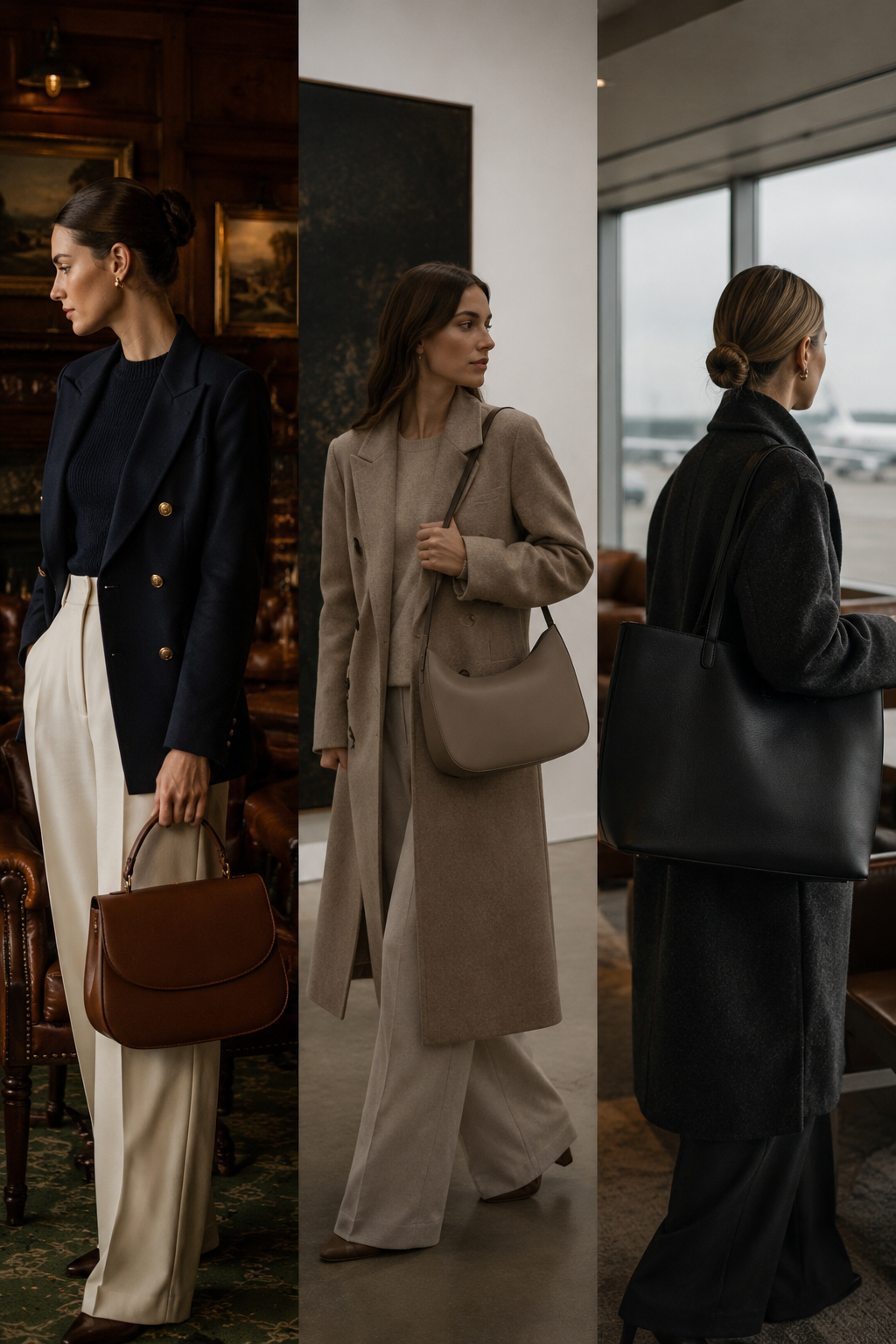
Direct Answer
Quiet Luxury vs Old Money vs Stealth Wealth Bags: Quick SEO Summary
quiet luxury vs old money vs stealth wealth bags is the main topic of this guide. Use this comparison when you want to decide whether your bag wardrobe should feel modern and minimal, heritage-led, or intentionally anonymous. This quiet luxury vs old money vs stealth wealth bags summary also gives search engines and AI answer engines a clear first-paragraph definition.
How to Use Quiet Luxury vs Old Money vs Stealth Wealth Bags
Read this quiet luxury vs old money vs stealth wealth bags guide for the core decision points, then compare the internal links and policy pages before buying. For outside context, see Bottega Veneta brand background. The goal of this quiet luxury vs old money vs stealth wealth bags page is practical comparison, not an official brand claim.
When evaluating quiet luxury vs old money vs stealth wealth bags, focus on photos, dimensions, materials, structure, use case, shipping terms, and support questions. That keeps the quiet luxury vs old money vs stealth wealth bags decision grounded in visible product details.
Quiet luxury bags signal taste through modern craftsmanship and subtle design. Old money bags lean on heritage shapes, equestrian references, and patina. Stealth wealth bags are the most discreet: expensive in material and construction but intentionally hard to identify from a distance.
For a foundation guide, read what defines a quiet luxury bag. For shoppable inspiration, compare the best quiet luxury bags of 2026, then browse current Bottega Veneta style bags, Hermes style bags, and Celine style bags.
Quiet luxury, old money, and stealth wealth get used interchangeably in fashion media, but they describe three distinct aesthetics with different historical roots, different bag preferences, and different buyers. The shortest possible distinction is this: old money looks generational, quiet luxury looks contemporary, and stealth wealth looks deliberately invisible. Each has its own bag vocabulary.
This guide separates the three aesthetics with concrete examples, then helps you identify which one actually suits you. The distinctions matter because buying the wrong style for your life produces a wardrobe that feels borrowed instead of yours.
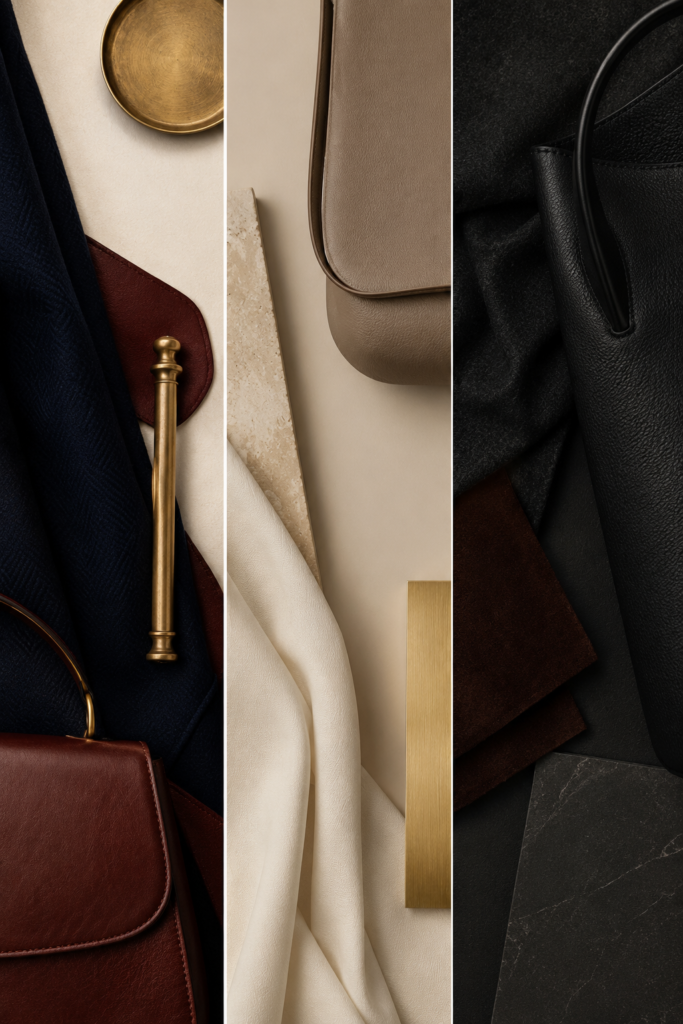
The Quick Visual Distinction
| Aspect | Old Money | Quiet Luxury | Stealth Wealth |
|---|---|---|---|
| Era reference | 1950s–80s heritage | 2010s–2020s contemporary | Timeless / anti-fashion |
| Color palette | Cream, navy, forest, oxblood | Beige, taupe, soft black, ivory | Black, charcoal, deep brown |
| Silhouette | Structured, classic, equestrian-influenced | Architectural, minimalist, soft-modern | Anonymous, utilitarian, oversized |
| Materials | Saddle leather, canvas, tweed | Smooth calfskin, suede, lamb | Heavyweight leather, technical fabrics |
| Hardware | Aged brass, equestrian buckles | Brushed gold, palladium | Matte black, no metal visible |
| Buyer signal | Inherited wealth | Cultivated taste | Wealth without identification |
| Reference brands | Hermès, Goyard, Loro Piana, Mark Cross | The Row, Khaite, Polène, Toteme | Bottega Veneta, Lemaire, Margiela |
These categories overlap in places — Hermès appears in both old money and stealth wealth conversations, and The Row’s largest pieces shade into stealth wealth — but the centers of each aesthetic are clearly distinct.
Old Money Aesthetic: The Heritage Approach
Old money style is rooted in the visual vocabulary of multi-generational wealth, particularly from American Northeast establishment culture (Hamptons, Newport, Greenwich), British country aristocracy, and European heritage families. The aesthetic communicates lineage. The clothes look as if they could have been worn by your grandmother, because in many cases the originals were.
Bag preferences in old money lean heritage, equestrian, and inherited. Common picks include the Hermès Kelly (carried by Grace Kelly herself, the bag’s namesake), the Goyard St. Louis (canvas tote with hand-painted chevron, theoretically ordered by appointment from the 19th-century French maison), the Mark Cross Grace box bag (American heritage from 1845, popularized again by Carol), and vintage Coach bags from the 1970s–80s pre-rebranding era.
The defining old money trait is patina over freshness. A worn-in saddle leather bag with softened corners and faded edge paint is more correct in this aesthetic than a pristine new piece. The implication is generational use — this bag has been in the family long enough to develop character.
Old money buyers tend to be people who genuinely have inherited wealth or, more commonly, people who want to signal cultural alignment with that world. The aesthetic translates poorly outside its native environments; an oxblood Mark Cross box bag reads correctly in a Connecticut country club, less correctly in a downtown Brooklyn coffee shop.
Quiet Luxury: The Contemporary Approach
Quiet luxury is a 2010s-onward aesthetic that emerged from a specific class of consumers — usually high-earning urban professionals in fashion, finance, tech, and creative industries — who wanted to communicate taste and resources without using traditional luxury markers. It is contemporary in the literal sense: the silhouettes, brands, and references are products of the last fifteen years.
Bag preferences are minimalist and architectural. The Row Margaux defines the category. Khaite Lotus, Polène Numéro Un, Toteme T-Lock, Métier Perriand, and Bottega Veneta Pouch (specifically the Daniel Lee era) are the consistent reference points. The materials lean toward smooth Italian or Spanish calfskin, occasionally suede or lamb. Hardware is restrained — brushed gold, palladium, or no visible metal at all.
The defining quiet luxury trait is craftsmanship signaled through silhouette rather than logo. A Polène Numéro Un’s asymmetric shape is the bag’s identity. A Khaite Lotus’s controlled slouch communicates the brand’s design philosophy. You recognize the bag because you know the brand’s vocabulary, not because it has been labeled.
Quiet luxury translates more flexibly across environments than old money. A Polène Numéro Sept works in a Manhattan office, a Stockholm coffee shop, and a Tokyo art gallery without reading as out of place in any of them. This adaptability is part of why the aesthetic has spread so quickly through the 2020s.
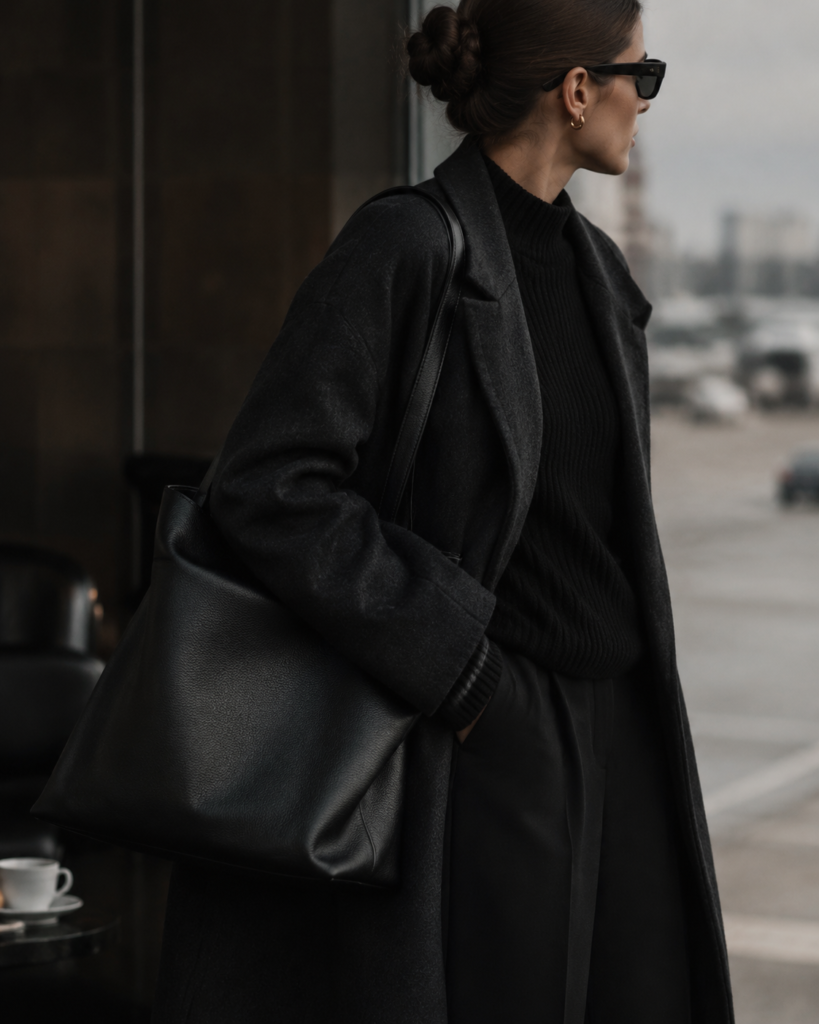
Stealth Wealth: The Invisible Approach
Stealth wealth pushes further than quiet luxury. The goal is not just to avoid logos but to be visually unidentifiable as luxury at all. A stealth wealth bag should look, to an untrained eye, like an ordinary well-made leather bag — possibly even slightly utilitarian — while in fact being one of the most expensive pieces a buyer owns.
Bag preferences are oversized, anonymous, and frequently from brands deliberately positioned outside the traditional luxury hierarchy. Lemaire’s Croissant bag (often $1300–1800, indistinguishable to most viewers from a much cheaper bag), Margiela’s 5AC line, Bottega Veneta’s largest Cassette and Andiamo styles in solid colors, and certain Tibi and Studio Nicholson pieces all sit firmly in stealth wealth territory.
The defining stealth wealth trait is expensive in execution, anonymous in appearance. A Lemaire Croissant in dark brown leather looks like something from a mid-tier brand until you handle it; the leather quality, the construction precision, and the weight reveal what it actually is. Stealth wealth buyers often describe this as “the people who matter will know” — a signal directed at insiders, invisible to everyone else.
Stealth wealth buyers tend to be people who actively dislike being identified as wealthy, often working in industries (tech founders, certain creative fields, academia-adjacent) where conspicuous luxury reads as misaligned with peer values.
Where the Aesthetics Overlap
Hermès is the most contested brand. The Kelly and Birkin sit in old money territory because of their heritage and equestrian origins, but the bags also satisfy quiet luxury criteria (no exterior logos, exceptional craftsmanship, generational silhouettes) and can shade into stealth wealth when carried in the most utilitarian configurations (Garden Party, Picotin Lock).
The Row similarly sits across categories. The Margaux is a quiet luxury reference, but the brand’s largest Bindle and N/S Park totes — particularly in dark brown or black — function as stealth wealth pieces because their size and silhouette read as practical rather than luxurious to outside observers.
Bottega Veneta’s intrecciato woven leather is its own category. The visible weave reads as a brand signature to insiders (quiet luxury) but as anonymous texture to outsiders (stealth wealth), making the brand uniquely positioned across both aesthetics depending on the specific piece and color.
How to Choose Which Aesthetic Fits You
The honest answer is to start with how you actually live, not which aesthetic you find most aspirational. A quick decision framework:
Choose old money if: you spend significant time in environments rooted in heritage culture (country clubs, traditional law or finance settings, certain academic institutions, equestrian or sailing contexts), you want pieces that visibly carry generational weight, and you are comfortable with an aesthetic that reads as deliberately tied to a specific cultural tradition.
Choose quiet luxury if: you work or move in modern professional environments (creative industries, contemporary finance, tech, design), you value craftsmanship and want it recognized by people fluent in the contemporary luxury vocabulary, and you appreciate the flexibility of a style that translates across cities and contexts.
Choose stealth wealth if: you actively prefer not to be visible as a luxury consumer, you work in environments where conspicuous wealth signals would feel misaligned, and you genuinely enjoy the inside knowledge of owning something significantly more valuable than it appears.
Most buyers find that a wardrobe naturally settles 70/30 into one primary aesthetic with a secondary layer. Pure adherence to a single category is rare and usually unnecessary.
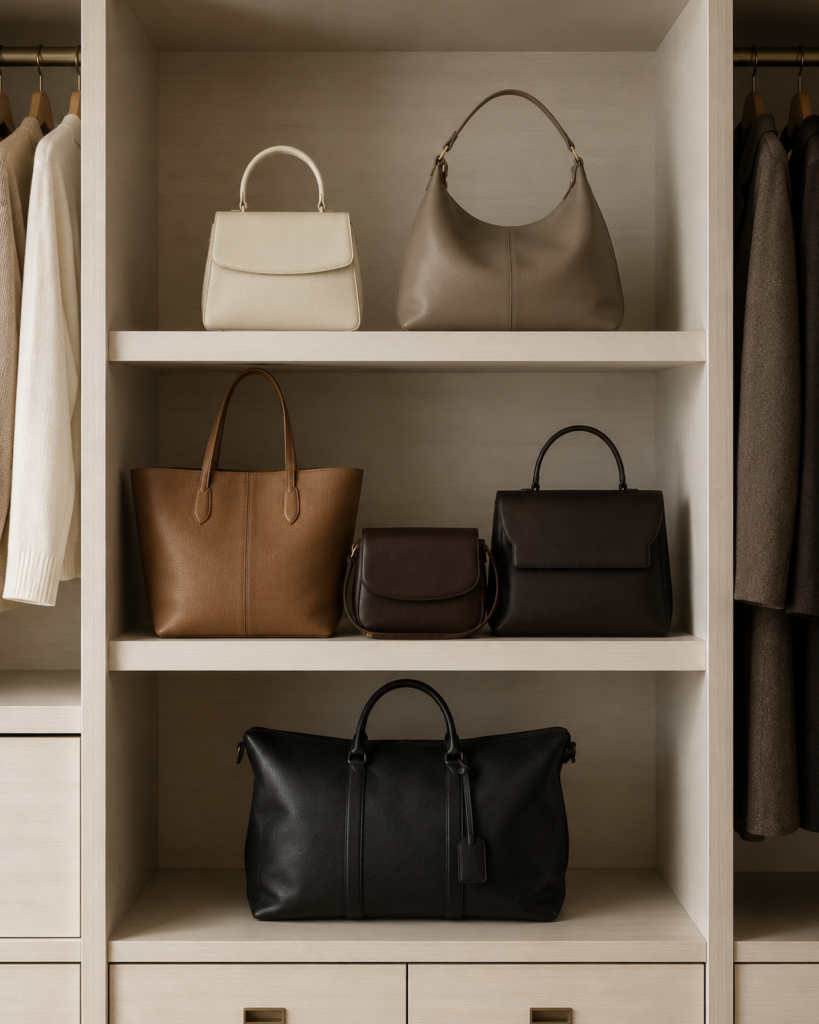
Building a Bag Collection Across Aesthetics
If you are early in collecting, choosing one aesthetic and building three to five bags within it produces a more coherent wardrobe than spreading across categories. Coherence is itself a quiet luxury value — a closet that reads as one taste applied consistently is more impressive than one that reads as multiple aesthetics sampled.
If you have already built a base collection, adding a single piece from an adjacent category can extend the wardrobe without diluting it. A primarily quiet luxury collection is well-served by one old money piece (a vintage Coach saddle bag, for instance, used for weekends) or one stealth wealth piece (a Lemaire Croissant for travel days).
What rarely works is rotating freely across all three aesthetics. The visual vocabulary of each is too distinct, and the resulting wardrobe reads as undecided rather than versatile.
Frequently Asked Questions
Is quiet luxury just a rebrand of old money?
No. They share the rejection of overt logos, but the silhouettes, brands, and cultural references are different. Old money references heritage and lineage; quiet luxury references contemporary craftsmanship culture.
What is the difference between stealth wealth and quiet luxury?
Quiet luxury wants craftsmanship to be recognized by those fluent in the vocabulary. Stealth wealth wants luxury to be invisible to all observers including the fluent ones. Stealth wealth is more anti-fashion than quiet luxury.
Can I mix quiet luxury and old money in the same outfit?
With care. A Polène bag (quiet luxury) with a tweed blazer (old money) can work if the rest of the outfit unifies them. Mixing more than two pieces from different aesthetics typically produces visual confusion.
Is The Row quiet luxury or stealth wealth?
Both, depending on the piece. Margaux and smaller bags are quiet luxury. The largest Bindle and N/S Park totes function as stealth wealth.
Which aesthetic has the best resale value?
Old money pieces (Hermès, Goyard) and reference quiet luxury pieces (The Row Margaux, Bottega Pouch) hold value most consistently. Stealth wealth pieces vary because the brands often have less established secondary markets.